 中文
中文On September 1, 2025, the 3rd Greater Bay Area Pharmaceutical Industry Manufacturing 4.0 Forum was successfully held at the Shenzhen Convention and Exhibition Center. The forum brought together top industry experts and corporate representatives to discuss the application and innovation of smart manufacturing technologies in the pharmaceutical industry. Mr. Wei Qingkun, Vice President of Canton Biologics, was invited to attend and delivered a keynote speech titled “Application of Smart Manufacturing 4.0 in Biopharmaceuticals,” sharing his insights on the intelligent transformation of biologics manufacturing.
01 Smart Manufacturing 4.0: A New Engine for Biopharmaceuticals
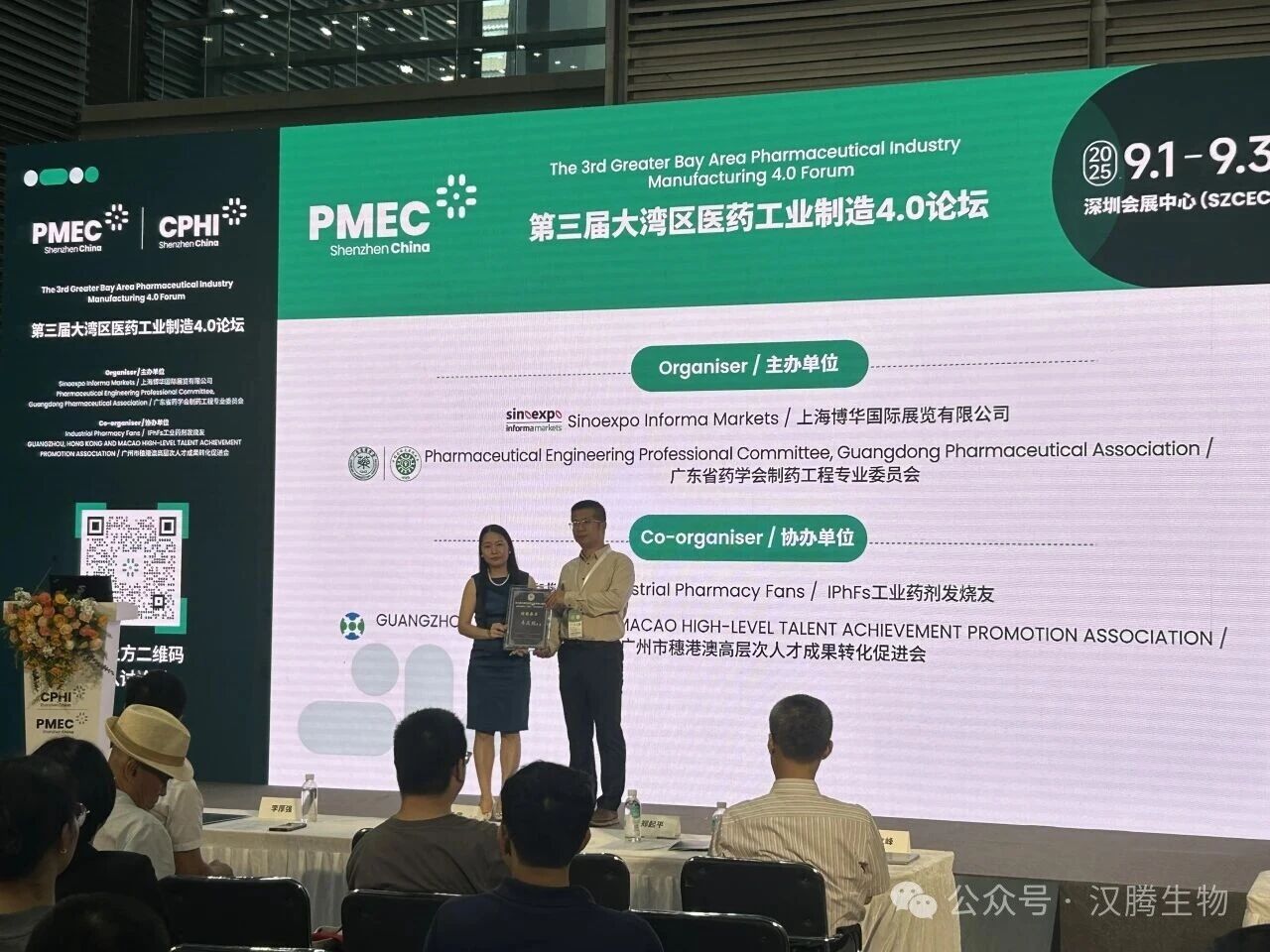
In his speech, Mr. Wei pointed out that Industry 4.0 is the deep integration of new‑generation information and communication technologies with advanced manufacturing technologies. By leveraging digital twins, the Internet of Things (IoT), big data, artificial intelligence (AI), and other technologies, smart factories and efficient production systems can be established, delivering three core values to the biopharmaceutical industry:
-
Efficiency improvement: Dramatically increase production efficiency through automation and data‑driven real‑time optimization.
-
Cost reduction: Optimize resource allocation, reduce energy consumption and material waste.
-
Quality enhancement: Achieve end‑to‑end quality control, improving product consistency and stability.
02 The Practical Path to Smart Manufacturing
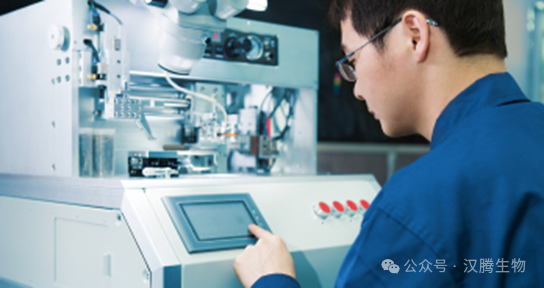
Mr. Wei detailed the three‑stage practice for building Smart Manufacturing 4.0 capabilities:
Stage 1: IoT and Equipment Interconnection
-
Deploy smart sensors and edge computing devices.
-
Monitor key equipment such as bioreactors and purification systems in real time.
-
Achieve full‑process data collection, reducing batch turnaround time by 20%–30%.
Stage 2: Production Information Platform
-
Establish a full‑traceability system for production management.
-
Implement automatic trigger testing for quality management.
-
Build an integrated platform for enterprise‑wide data.
Stage 3: Intelligent Decision‑Making and Application
-
Use deep learning algorithms for anomaly detection and early warning.
-
Establish a “golden batch” benchmarking system.
-
Realize predictive maintenance and fully automated process control.
03 Future Outlook and Challenges
Mr. Wei noted that the future of smart manufacturing in biopharmaceuticals faces three major challenges:
-
Incomplete industry standards and difficulty in industrial chain coordination.
-
Shortage of interdisciplinary talent combining biopharma and digital expertise.
-
Increased cybersecurity protection requirements.
Nevertheless, he affirmed that Canton Biologics will continue to advance the R&D and application of innovative technologies such as digital twins, continuous process implementation, and accelerated process validation, helping the biopharmaceutical industry transition toward “Digital & Smart 4.0”.